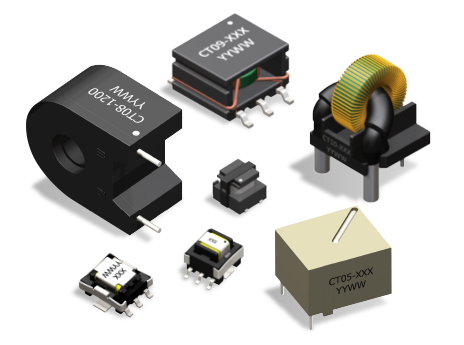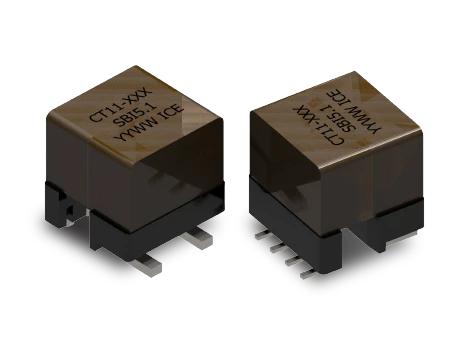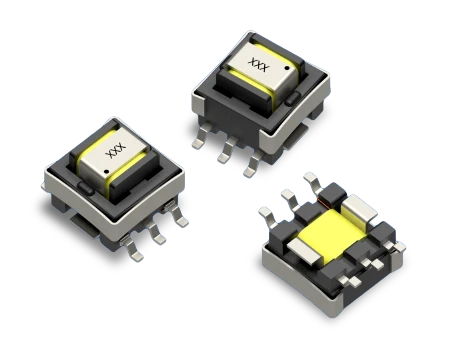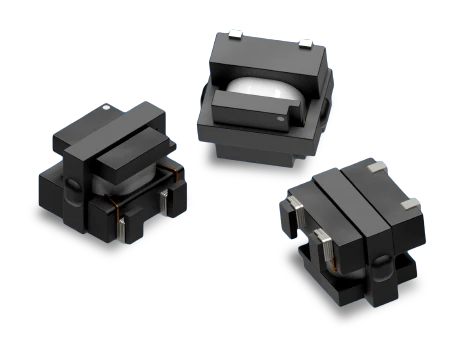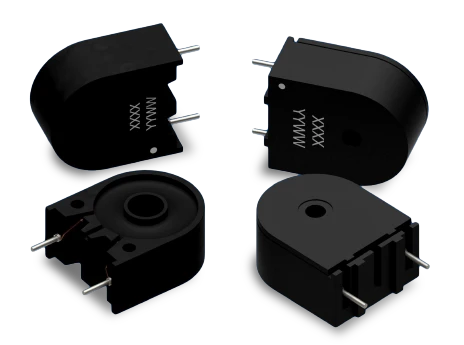


CT11 SERIES: High Isolation Current Sense Transformers
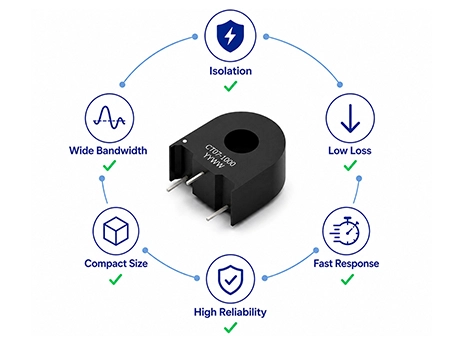
  • Meets Updated IEC Standards
  • Current: 30 A Max
  • Frequency: 200 Hz to 1 MHz
  • Hi-Pot: 3000 VAC

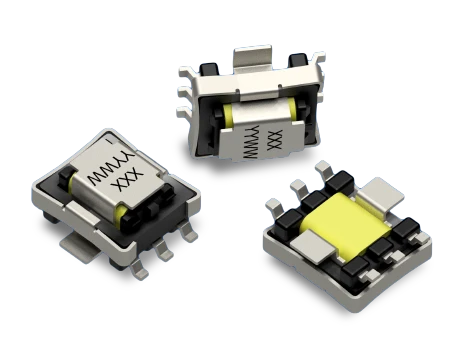
CT01 SERIES: Low-Profile SMT Current Sense Transformer

  • Current: 10 A Max
  • Frequency: 1.5 MHz Max
  • Hi-Pot: 500 VAC

CT02 SERIES: Smallest SMT Current Sense Transformers
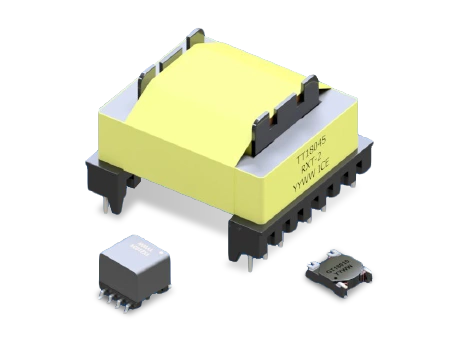
  • Smallest Footprint
  • Current: 18 A Max
  • Frequency: 1.5 MHz Max
  • Hi-Pot: 1500 VAC

CT03 SERIES: Tombstone THT Current Sense Transformers

  • UL Class B Insulation
  • Current: 25 A Max
  • Frequency: 500 kHz Max
  • Hi-Pot: 3750 VAC

CT04 SERIES: Low-Profile SMT Current Sense Transformers

  • Low Profile
  • Current: 20 A Max
  • Frequency: 1.5 MHz Max
  • Hi-Pot: 500 VAC

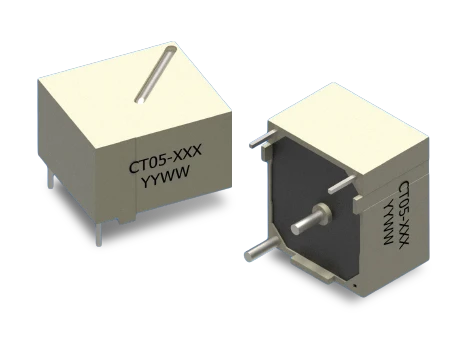
CT05 SERIES: Compact THT Current Sense Transformers

  • Compact Package
  • Rating: 25 A Max
  • Frequency: 500 kHz Max
  • Hi-Pot : 4000 VAC

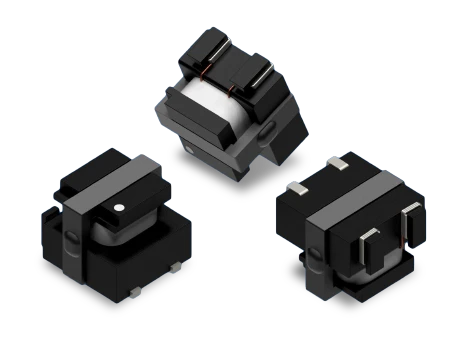
CT06 SERIES: Low-Profile SMT Current Sense Transformers

  • Small Footprint
  • Current: 18 A Max
  • Frequency: 1.5 MHz Max
  • Hi-Pot: 1500 VAC

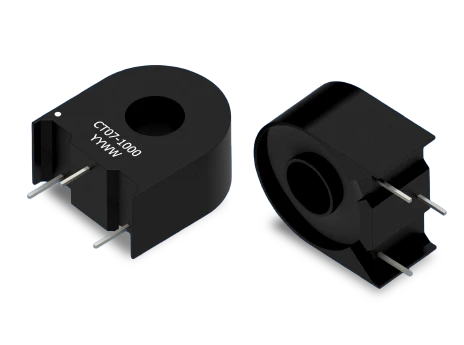
CT07 SERIES: Encapsulated THT Current Sense Transformers

  • High Current Density
  • High Accuracy
  • Reduced Core Loss
  • Current: 200 A Max
  • Frequency: 40 Hz to 3.2 kHz
  • Hi-Pot: 3750 VAC

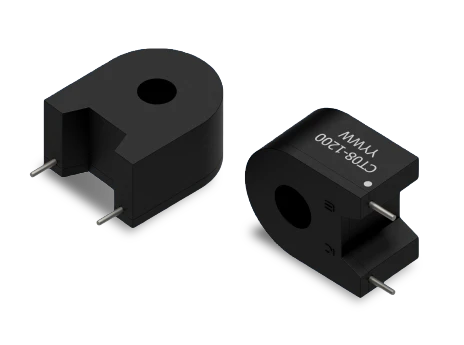
CT08 SERIES: Tombstone THT Current Sense Transformers

  • High Accuracy
  • Reduced Core Loss
  • Current: 50 A Max
  • Frequency: 40 Hz to 4.7 kHz
  • Hi-Pot: 3750 VAC

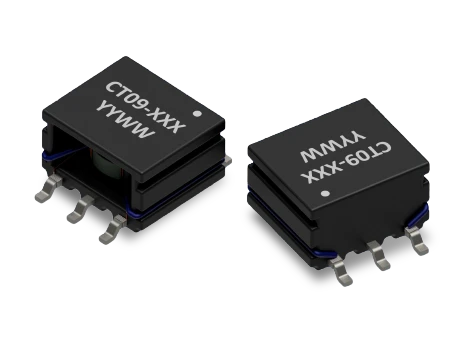
CT09 SERIES: High-Creepage SMT Current Sense Transformers

  • 9.2mm Creepage
  • Current: 6 A Max
  • Frequency: 1.5 MHz Max
  • Hi-Pot: 3750 VAC

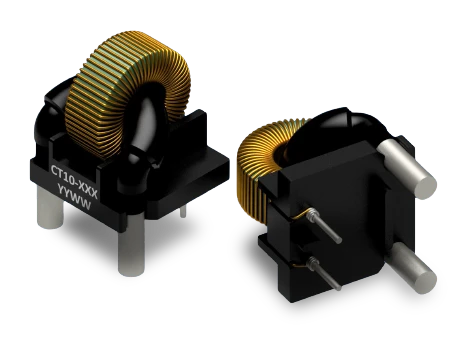
CT10 SERIES: Compact THT Current Sense Transformers

  • Current: 40 A Max
  • Frequency: 400 kHz Max
  • Hi-Pot: 3000 VAC

Technical Highlights

  • Galvanically isolated current sensing for SMPS and power conversion systems
  • Optimized turns ratios for accurate scaling and transient response
  • Wide current monitoring range with low insertion loss
  • High isolation performance for safety and EMI immunity
  • Suitable for line-frequency and switching-frequency applications
  • Compact SMT and through-hole package options
  • Stable electrical performance across varying load conditions

Typical Applications

  • DC-DC converters and AC-DC power supplies
  • Current-mode control and feedback loops
  • Over-current and short-circuit protection
  • Point-of-load (POL) regulators
  • Industrial and telecom power systems
  • Motor drives and inverter current monitoring
  • UPS and energy storage systems
  • General isolated current measurement in switching circuits
Part Number Drive Inductance (μH, Min) Turns Ratio (Pri:Sec1:Sec2) DCR (mΩ, Max) ET Product (V-μs, Max) Leakage Inductance (nH, Min) SRF (MHz,Typ) Hi Pot (Drive:Gate)(Vdc) Length (mm, Max) Width (mm, Max) Height (mm, Max) Creepage (mm, Min) Mounting Type Pick & Place TI Product Compatibility Infineon Product Compatibility Samples Availability Mouser Availability

Custom Solutions & Capabilities

ICE offers custom current sense transformers tailored to specific primary current ranges, turns ratios, frequency performance, and isolation requirements. Our team can optimize core material, winding structure, and DCR to improve accuracy, transient response, and thermal performance in demanding SMPS environments.

We support both SMT and through-hole configurations, including high-current and high-isolation variants. Whether your design requires enhanced measurement sensitivity, reduced insertion loss, or tailored mechanical integration, ICE develops precision magnetic solutions engineered for reliable current feedback and protection circuits.

Open Request Form

Frequently Asked Questions (FAQs)

Why are current sense transformers unsuitable for pure DC measurement?

+

They rely on changing magnetic flux and therefore measure AC or pulsed currents, not steady-state DC.

How does turns ratio affect output amplitude?

+

Secondary current equals primary current divided by the turns ratio, enabling signal scaling.

What determines measurement bandwidth?

+

Core material permeability, winding capacitance, and burden resistor selection define frequency response.

How does burden resistor selection impact accuracy?

+

Improper burden values can reduce linearity and limit bandwidth.

What causes phase shift in measurement?

+

Magnetizing inductance and core losses introduce phase error at higher frequencies.

Can they handle high di/dt conditions?

+

Yes, if designed with sufficient bandwidth and low leakage inductance.

What limits saturation current?

+

Core cross-sectional area and material properties determine maximum measurable current.

How do I reduce insertion loss?

+

Minimize DCR and optimize winding structure.

Are they suitable for overcurrent protection?

+

Yes, especially in fast transient detection circuits.

How does temperature affect performance?

+

Core permeability and copper resistance vary with temperature, impacting accuracy.